Essential 2026 Guide: From Indian Farms to Global Markets The Export Story of Onion & Green Chilli
Fresh red onion export from India is enjoying its most favourable trading window in years. On 1 April 2025 the government removed the 20% export duty, and by April 2026 both the duty and the Minimum Export Price (MEP) had been fully lifted. Indian onions are competitive againand buyers diversifying their food supply chains are paying attention.
But onions never travel alone. The same Indian farm network that fills a 40-foot container with Nashik reds also air-freights G4 green chillies to London and Dubai and ships drumsticks to diaspora markets worldwide. At Vipasvi Overseas Hubb, we see buyers increasingly consolidate all three with one partner. This guide covers what you need to know before you do.
1. The 2026 Fresh Produce Market in Numbers
The case for fresh red onion export from India starts with scale. Per FAO data cited by APEDA, India is the world’s largest producer of onions and okra, and ranks second in potatoes, tomatoes, cauliflower, brinjal and cabbage. During 2024-25, India exported fresh fruits and vegetables worth US$1,818.56 million, with onions, mixed vegetables, potatoes, tomatoes and green chilli contributing the largest share of the vegetable basket.
The leading destinations for Indian fresh produce are Bangladesh, UAE, Iraq, Netherlands, Nepal, Malaysia, UK, Sri Lanka, Oman and Uzbekistan. On volume, India dominates global red onion trade with over 1.8 million tonnes exported annually, representing roughly 70% of the country’s US$525 million onion export revenueand projections point to 1.8–2.2 million tonnes in FY 2025-26, up from about 1.5 million tonnes in 2024.
For anyone planning agricultural export India vegetables sourcing, that combination of production depth and destination spread is the reason India keeps appearing on shortlists.
2. Policy Reset: Why 2026 Favours Buyers
Understanding policy is not optional in this trade. India has historically used export duties, Minimum Export Prices and outright bans to stabilise domestic onion pricesand those interventions have burned importers before.
The current picture is the friendliest in years. The 20% export duty was removed effective 1 April 2025, eliminating MEP restrictions, and the new crop arrived 18% larger than the prior year. As of April 2026, both the MEP and the export duty remain fully removed, creating the most favourable export environment in years for fresh red onion export from India.
Contract smart anyway. Experienced buyers still write three protections into every deal: a force majeure clause that specifically names an India onion export ban or MEP reinstatement; a rule never to pay more than 20% upfront until APEDA clears the shipment at the Indian port; and a backup origin (Egypt or Pakistan) on standby. Good policy today is not a guarantee for next season.
3. Fresh Red Onion Export from India: Grades & Specs
As with any produce trade, the spec sheet is the contract. Write these into the proforma invoice for the export of fresh red onions from India:
- Size grades the primary commercial variable. Common export calibres run 25–35 mm, 35–45 mm, 45–55 mm, 55–65 mm and 65 mm+, matched to destination preference.
- Colour uniform deep red skin colour, characteristic of the Nashik crop.
- Firmness & maturity: well-cured, tight necks, no sprouting.
- Moisture / curing: properly cured bulbs; under-cured onions rot in transit.
- Defects are free from mould, black mould, rot, mechanical damage and soil.
- Packing 5kg, 10kg, 20kg or 25kg mesh/jute bags; ventilated stowage.
Different countries want genuinely different onion sizes; preference in Malaysia is not preference in the Gulf. Confirm the calibre before quoting, not after.
4. Export-Grade Onion Supplier Maharashtra: Why Nashik
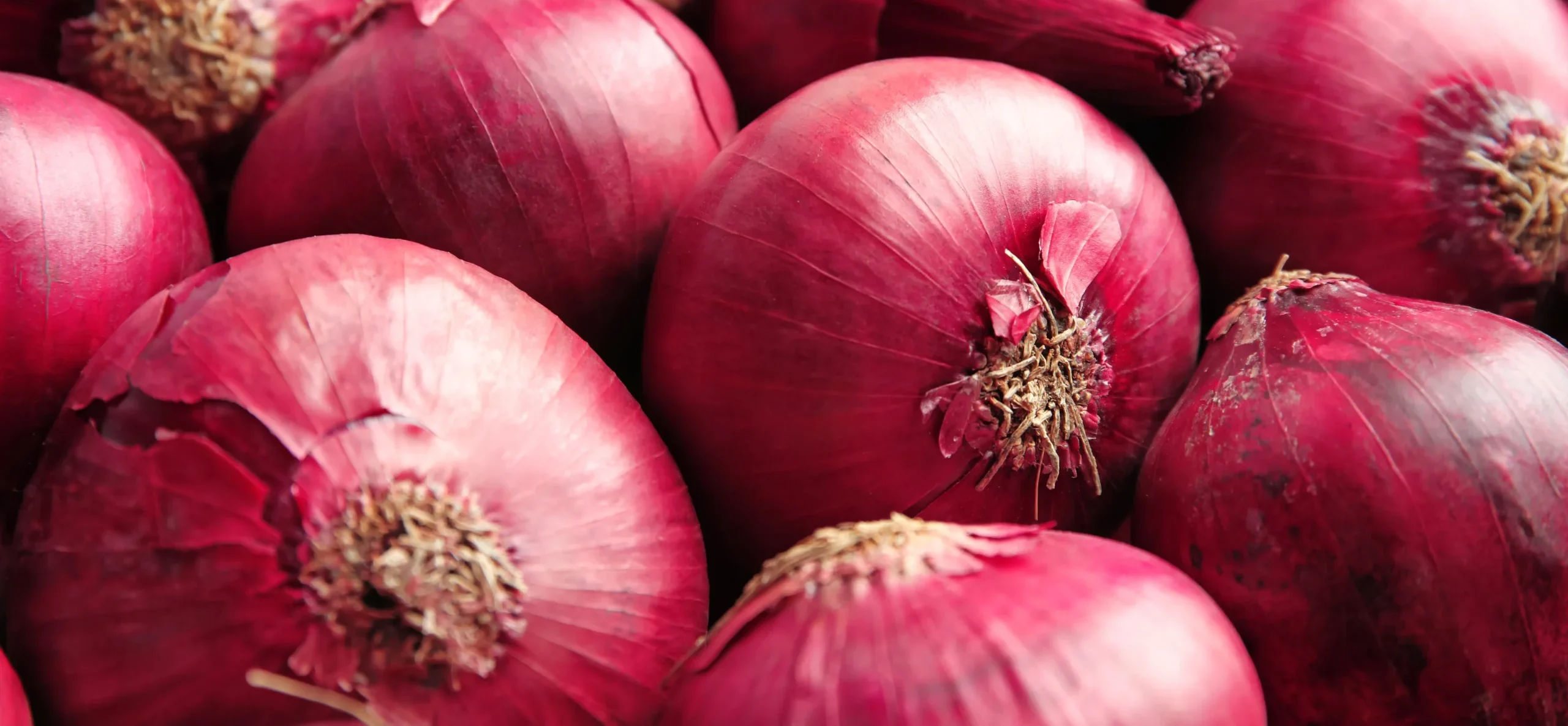
Ask any experienced importer where to find an export-grade onion supplier Maharashtra is the answer, and Nashik is the district that matters. Nashik’s volcanic black soil is renowned for producing the world’s longest-lasting, most pungent red onionswhich is exactly what a buyer needs when the container will be at sea for weeks.
Maharashtra leads India’s onion belt alongside Karnataka, Madhya Pradesh, Rajasthan and Gujarat. Working with an export-grade onion supplier Maharashtra also means access to the Lasalgaon APMCAsia’s largest onion marketwhose daily arrivals are the single best real-time indicator of where your price is heading.
Pungency and shelf life are the two attributes that make Nashik reds the benchmark for fresh red onion export from India. Cheaper origins exist. Longer-lasting ones largely do not.
5. Onion FOB Pricing & Seasonality
Indian onion FOB prices in 2025-26 have mostly ranged between US$500 and US$750 per metric tonne for standard red onions leaving Indian ports. For early 2026, market watchers expect roughly US$0.35–0.42/kg as the Rabi crop enters the market.
Season is the biggest single price lever. India runs three onion seasons; the Rabi crop, harvested February to May, is the largest and the main source for exports. Kharif-season onions (October–November) typically cost 40–80% more than Rabi onions of the same quality. Shipments between March and June consistently get the best FOB rates.
The practical takeaway for fresh red onion export from India: plan bulk purchases around the Rabi window, and track Lasalgaon APMC daily arrivals rather than relying on last month’s quote.
6. Indian Green Chilli Exporter: The G4 Story
Where onions travel by sea, green chillies fly. A serious Indian green chilli exporter runs an air-freight operation, because the product is judged on arrival freshness, not on paper.
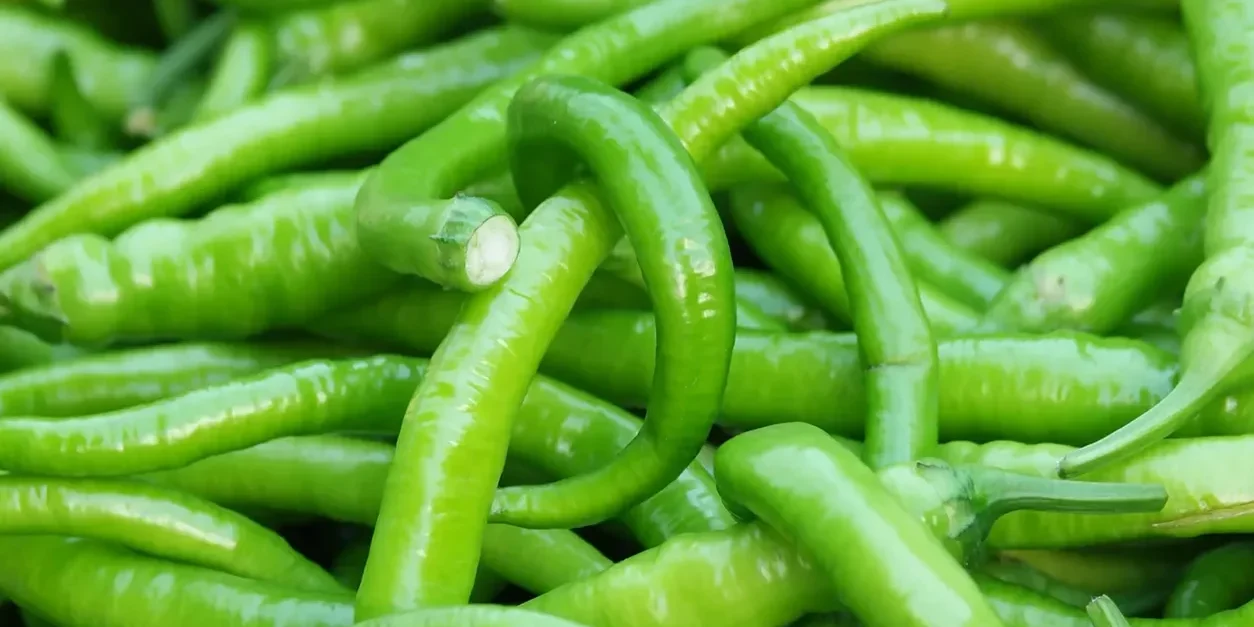
The export workhorse is the G4 green chilli vibrant dark green colour, smooth skin and high heat, and the preferred variety for the UK and Dubai markets. Demand for green chilli export from India is strong in the UK, Qatar, Dubai and Singapore, particularly through supermarkets and the spicy-dish segment.
What separates a good Indian green chilli exporter from a bad one
- Pre-chilling. Pre-chilling and freshness maintenance are what keep chillies crisp rather than shrivelled on arrival.
- Ventilated packing. Ventilated boxes, not sealed cartons.
- Moisture control. Moisture is the first thing inspectors check; even slightly high moisture leads to mould in transit.
- Pesticide compliance. EU limits are strict, and passing an Indian test does not guarantee passing an overseas one. Insist on destination-standard residue testing.
Green chilli is where an exporter’s cold chain gets tested honestly. Buyers in the Middle East and Southeast Asia prioritise freshness and firmness before priceand that is the stage where exporters either build long-term business or quietly exit.
7. Drumstick Vegetable Export India: The Superfood Play
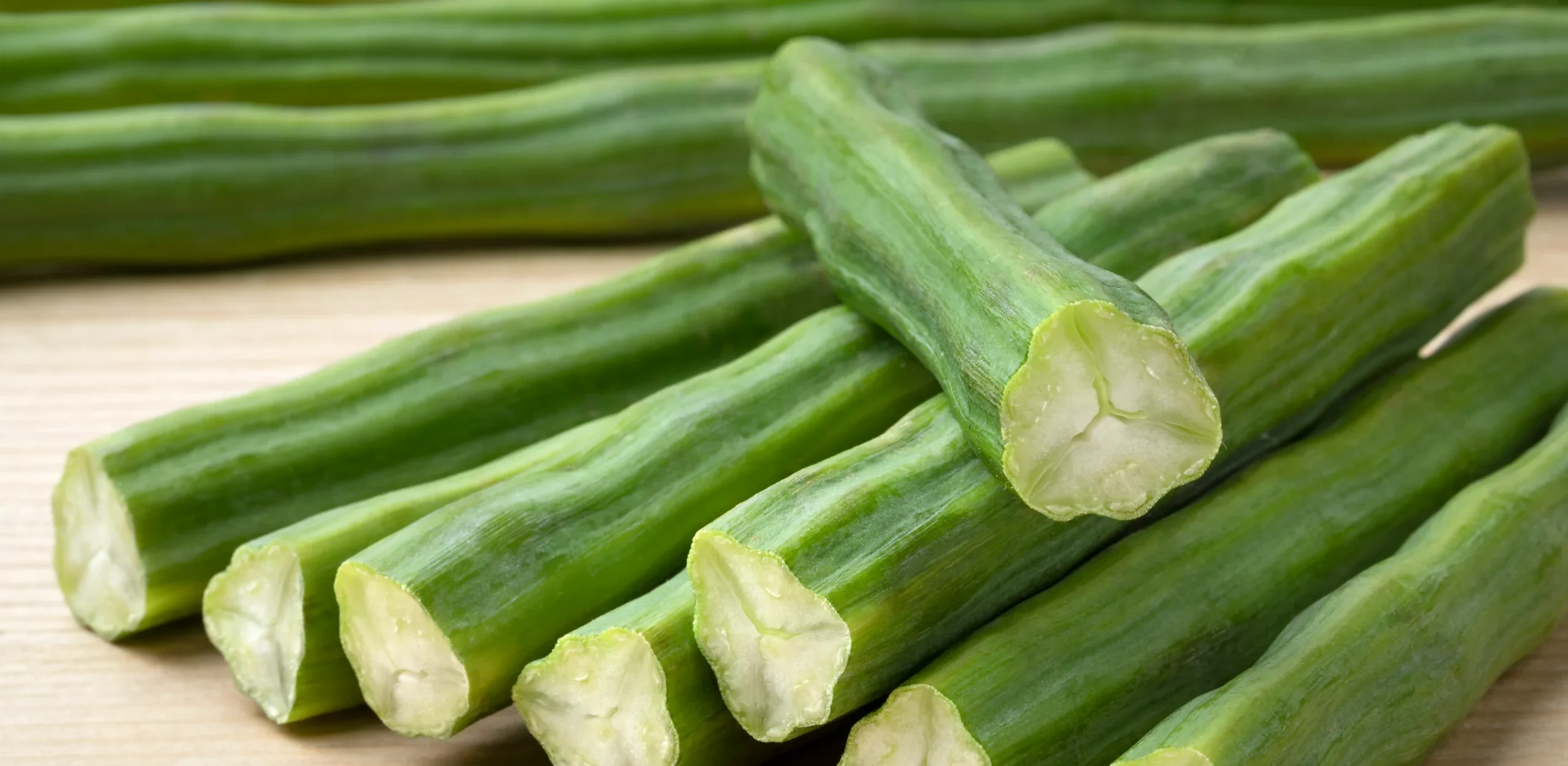
Once a niche vegetable, the drumstick is now a global superfood under its other name: moringa. Drumstick vegetable export India serves two distinct demand streamsmassive demand from the Indian diaspora in the UK and USA, and health-conscious consumers across Europe.
Commercially, drumstick vegetable export India works because the pods are hand-harvested, trimmed, graded and packed in moisture-safe boxes, then moved fresh. Drumstick sits alongside bitter gourd, bottle gourd, sweet corn and green beans as one of the fastest-growing vegetable export opportunities from India.
For buyers already importing onions and chillies, adding drumstick is often the cheapest incremental SKUsame supplier, same documentation, same cold chain.
8. Bulk Vegetable Export B2B: Process & Documents
Bulk vegetable export B2B from India follows a defined compliance path. Miss a document and the container sits.
Mandatory documentation for agricultural export India vegetables:
- APEDA Registration (RCMC)you cannot export farm goods without it.
- IEC CodeImporter Exporter Code.
- Lab testingsamples to an NABL-approved lab.
- Phytosanitary Certificateissued by Plant Quarantine officials, proving freedom from pests.
- FSSAI licence, Certificate of Origin, Commercial Invoice, Packing List and Bill of Lading.
HS code note: all DGFT rules use HS 0703 10 for fresh onions; this document covers the April 2025 duty removal and the historic MEP and ban rules. Dried and powdered onions fall under 0712 codes. Watch DGFT for changes to your exact code.
Beyond paperwork, what makes bulk vegetable export B2B actually work is operational: proper grading, clean packaging, pre-chilling, freshness maintenance and quick transportation. A Custom House Agent (CHA) is standard practice for rapid port clearance.

9. Choosing the Right Partner
Five things to demand from any partner handling fresh red onion export from India or wider produce:
- Valid APEDA RCMC and IEC
- NABL lab reports and a phytosanitary certificate per shipment
- Cold-chain and pre-chilling infrastructurenon-negotiable for chilli and drumstick
- Direct farm partnerships in the Nashik belt for onion consistency
- Contract terms that survive a policy changeforce majeure naming export bans and MEP
That compliance-first approach is how we handle agricultural exports of Indian vegetables at Vipasvi Overseas Hub, connecting Indian farms to importers, distributors and retail chains worldwide.
Frequently Asked Questions (FAQs)

Mr. Rahul Dhotre
Position: Supply Chain & Procurement Head, Vipasvi Overseas Hubb
Mr. Rahul Dhotre serves as the Supply Chain & Procurement Head at Vipasvi Overseas Hubb, overseeing sourcing, logistics, and end-to-end supply chain operations. With a sharp focus on efficiency, quality control, and strong farmer and vendor partnerships, he ensures the seamless movement of premium Indian agricultural products from field to international markets with reliability and transparency.