Essential 2026 Guide: What Global Buyers Need to Know Before Importing Basmati Rice from India
Premium basmati rice export India are having a record moment. In calendar year 2025 India shipped 21.55 million tonnes of rice, the second-highest on record, and basmati alone hit an all-time high of 6.4 million tonnes. Yet most first-time importers still get burnt on the same three things: grain length, moisture, and documentation. This guide fixes that.
At Vipasvi Overseas Hubb, the buyers who succeed with premium basmati rice export from India are the ones who specify before they negotiate. “Basmati” on an invoice means almost nothing. A grain-length certificate, a moisture reading and a sortex percentage mean everything.
1. The 2026 Basmati Market in Numbers
The demand behind premium basmati rice exports from India is documented, not anecdotal. According to APEDA, India exported 6,065,483 MT of basmati rice worth Rs. 50,312 crore (US$5,944 million) in 2024-25, making it the world’s leading basmati exporter. The top destinations were Saudi Arabia, Iraq, Iran, the UAE and Yemen.
Momentum continued into 2025-26. After all export restrictions – the non-basmati white rice ban, minimum export prices and the broken rice ban – were lifted by March 2025, calendar-year 2025 exports jumped 19.4% to 21.55 million tonnes. Basmati reached an all-time record 6.4 million tonnes.
Pricing has been volatile, which is precisely why premium basmati rice export India rewards buyers who lock in specs early. Basmati export prices diverged sharply in early 2026, with India’s Pusa Basmati rising to roughly US$1,150/MT in February 2026 from US$925/MT, driven by tight mandi arrivals and strong demand from the Middle East.
2. Why Indian Basmati Commands a Premium
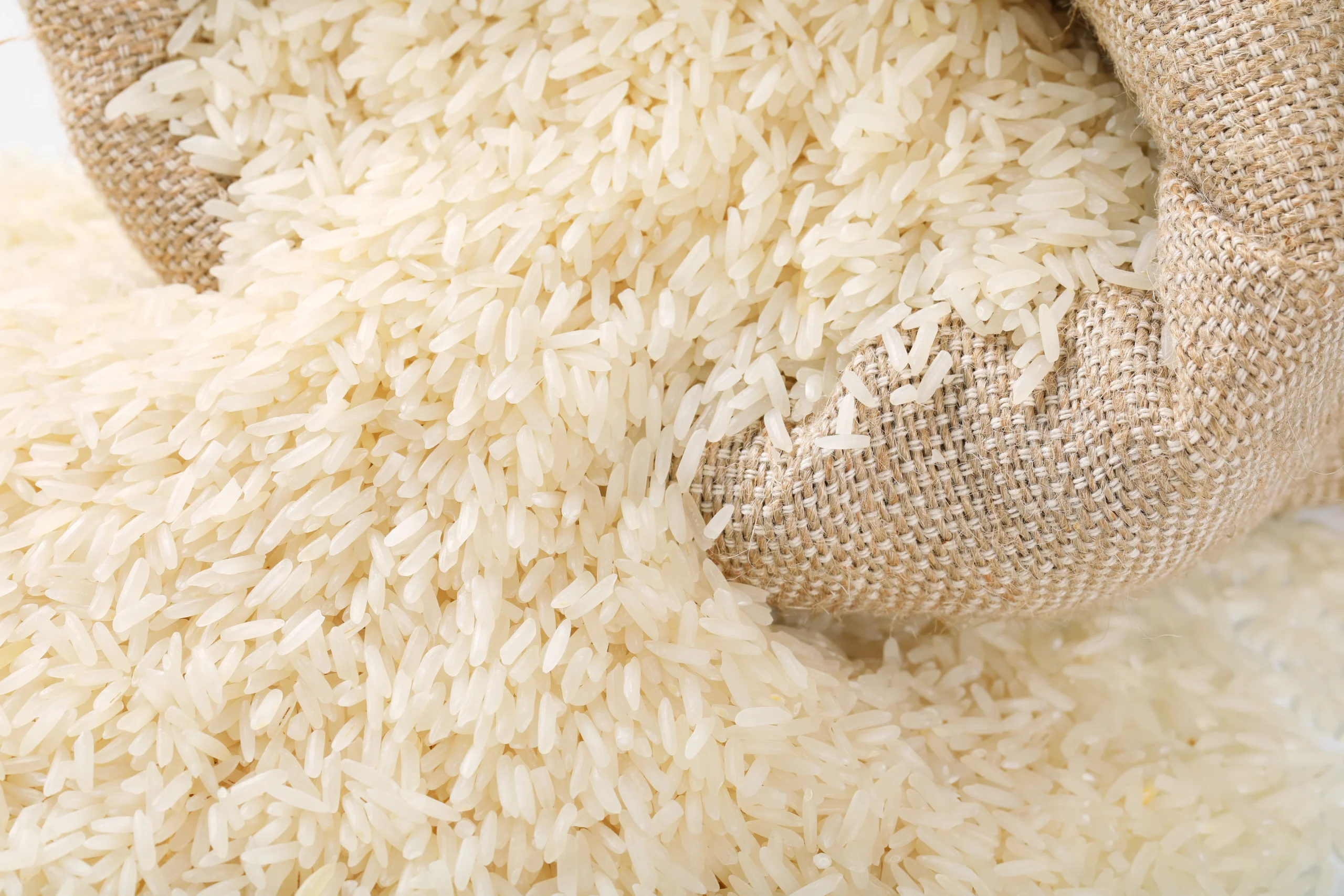
Basmati is a Geographical Indication (GI) product grown in the Indo-Gangetic Plains at the foothills of the Himalayas. That origin combined with aroma, extreme grain elongation and non-sticky cooking is what makes premium basmati rice exports from India a high-value trade rather than a bulk commodity trade.
India maintains trade relations with over 140 importing nations and backs shipments with APEDA quality certification. Over 43,000 Registration-cum-Allocation Certificates (RCACs) were issued to basmati exporters in 2025-26, reflecting a structured, compliance-driven export ecosystem. Buyers value origin integrity, aroma, grain length and batch consistency, which is why Indian basmati commands a global premium.
3. Export-Grade Basmati Rice Quality Standards
This phase is where deals are won or lost. Export-grade basmati rice quality standards are measurable, and every serious buyer should demand them in writing on the proforma invoice.
The specification checklist for premium basmati rice export from India:
- Average grain length is the headline number. Genuine 1121 basmati should measure 8.20 mm to 8.50 mm raw, with 8.35 mm the common export benchmark.
- Moisture 12% to 12.5% maximum. Higher moisture means weight you paid for that will spoil in transit.
- Purity 94–95% typical; natural admixture up to 5%.
- Broken grain: 5% to 1% maximum for premium grades.
- Damaged / discoloured 5% maximum.
- Sortex: 100% Sortex-cleaned; nil foreign matter and black grain.
- Elongation premium: 1121 grains expand up to around 30% on cooking.
India requires APEDA registration, GI compliance for basmati, HACCP and ISO 22000 standards, phytosanitary certification, and batch-level traceability. Always request a lab report or grain-length certificate before purchasing. “Basmati” alone is not a specification.
Serious contracts also require a third-party pre-shipment inspection by an agency such as SGS, Eurofins or Intertek to assess quality, quantity and compliance before the container sails.
4. Understanding 1121 Basmati Grades
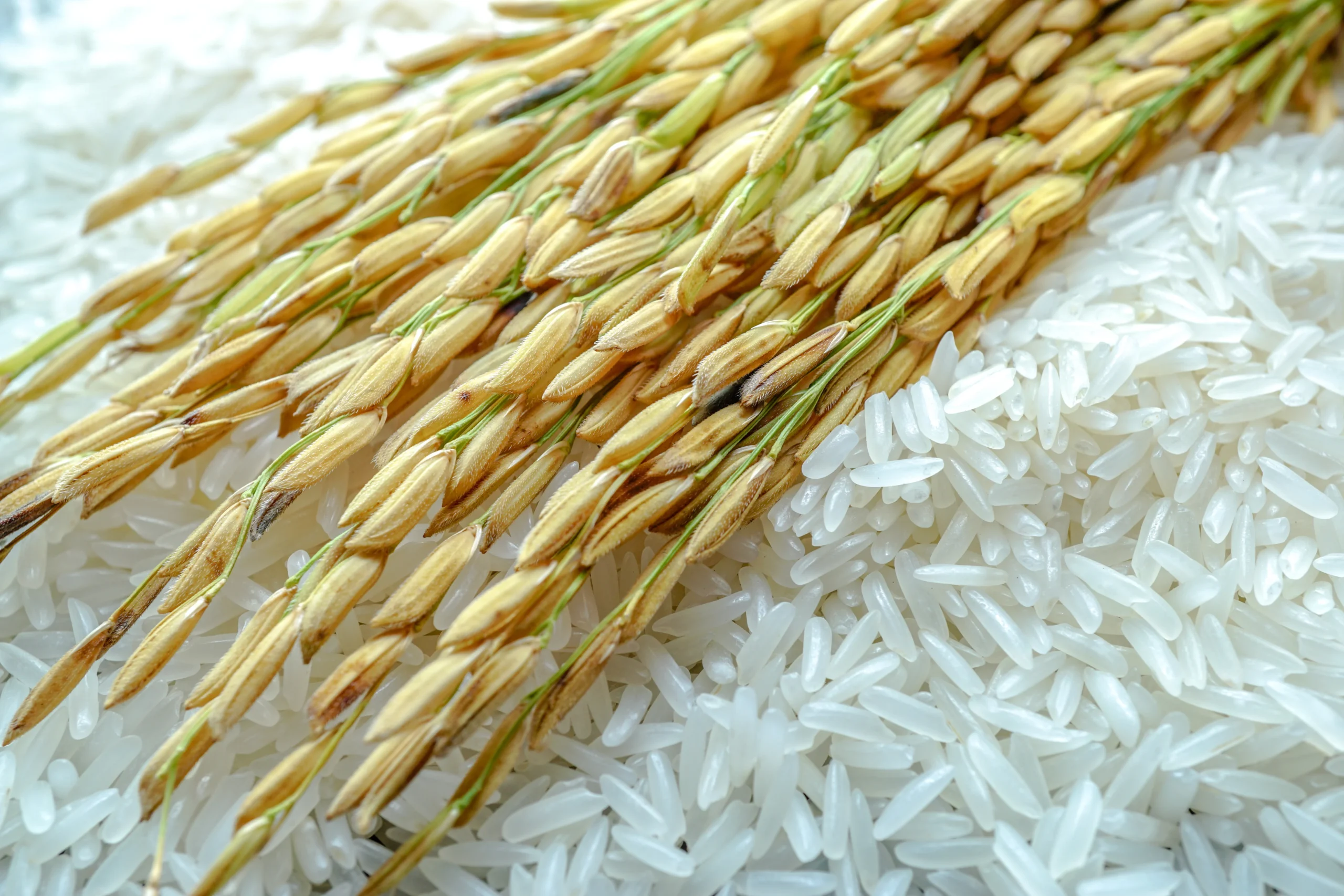
Pusa 1121 is the flagship of premium basmati rice exports from India, with the longest grain and the highest elongation. But “1121” splits into processing grades, and choosing wrong costs money. Importantly, these are different commercial purposes, not a quality hierarchy.
1121 Raw (White) Basmati
Directly milled, aged, bright white grains with soft cooking characteristics. Preferred by European and US retail and diaspora buyers who buy based on aroma and appearance.
1121 Steam Basmati
Steam-treated before milling, which strengthens grain structure and improves cooking stability. Grains cook separately, making biryani and pulao are favourites and top sellers across the Middle East.
1121 Golden Sella (Parboiled)
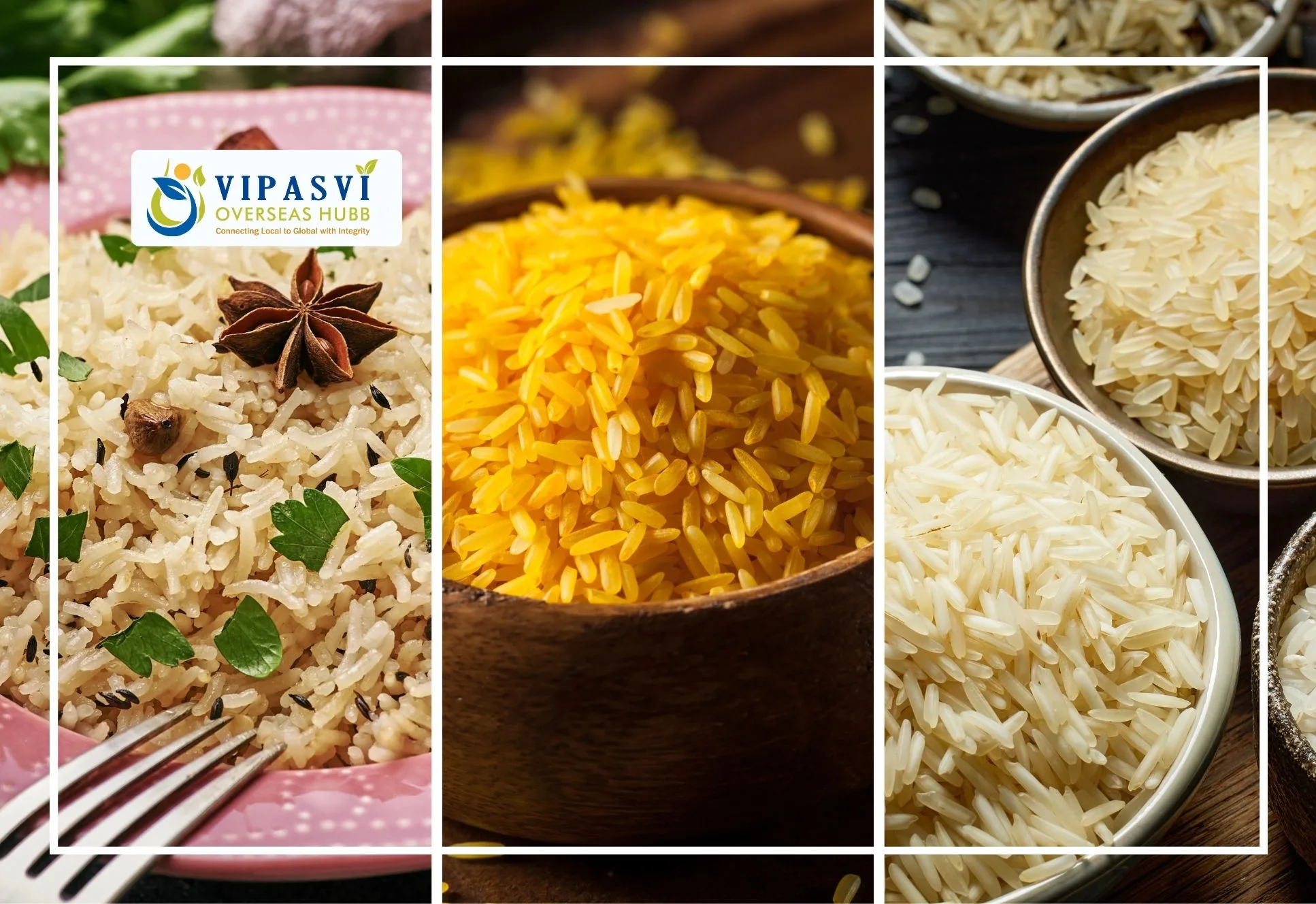
Parboiled before milling. The golden colour comes from parboiling, not from inferior grain, which is a common misconception among buyers. It resists breaking when stirred with meat dishes, which is why Gulf markets prize it. Sella grades also carry the longest shelf life (24+ months), making them the smart pick for long shipping routes or slow inland distribution.
1121 Creamy Sella
Parboiled with a creamy-white finish; typical specs are 8.35 mm average length, 12% max moisture, 1% max broken, 94% purity, and 100% Sortex.
Rule of thumb: fast retail turnover means raw or steam. Long routes, humid warehousing or foodservice → Sell a. This single decision is the most common mistake in premium basmati rice export in India.
5. Sona Masoori Rice Export: The Value Alternative
Not every buyer needs 8.35 mm grains. Sona Masoori rice export serves a different, large and growing segment: a lightweight, aromatic, medium-grain non-basmati rice grown mainly in Karnataka, Telangana and Andhra Pradesh. It is the everyday staple for South Indian cuisine, popular for idli, dosa batter and daily meals.
Sona Masoori rice export makes commercial sense where the target market is price-sensitive or where the end use is South Indian food service and diaspora retail across the USA, the Gulf, Singapore and Malaysia. Non-basmati volumes are enormous 15.15 million tonnes in 2025, up 25% so supply is deep and pricing is competitive. Many buyers run Sona Masoori alongside premium basmati rice exports from India to serve both ends of their customer base from one supplier
6. Indian Basmati Rice FOB Price: How It Works
The Indian basmati rice FOB price means Free On Board the price of the goods loaded onto the vessel at an Indian port (typically Mundra, Kandla or Nhava Sheva). Ocean freight, insurance and destination duties are the buyer’s cost from there. CIF quotes include freight and insurance to your port.
What actually moves the Indian basmati rice FOB price:
- Variety and grade 1121 Golden Sella prices differ from Pusa Raw or Sugandha.
- Grain length and purity: every extra 0.1 mm and every purity point carries a cost.
- Crop year and aged basmati command more than current-crop.
- Paddy and mandi prices: basmati paddy reached INR 3,871/qtl in February 2026 on tight arrivals.
- Freight and geopolitics: Strait of Hormuz disruptions materially affected 2025-26 shipments and sentiment.
- Packaging bulk jute/PP vs printed retail packs and private labels.
Treat any FOB quote as valid only against a stated specification and a validity window. A cheap Indian basmati rice FOB price against a vague spec is not a saving; it is a substitution risk.
7. How to Buy Basmati Rice in Bulk (B2B Process)
For B2B importers, the process for buying basmati rice in bulk is standardised. A professional premium basmati rice export India workflow runs like this: Specify variety, grade, grain length, moisture, broken %, purity, sortex, packaging.
- Specify variety, grade, grain length, moisture, broken %, purity, Sortex, and packaging.
- Sample request: pre-shipment samples and a grain-length certificate.
- Quote lock FOB or CIF against that exact spec, with validity dates.
- Contractually agree on payment terms (LC at sight is standard for new relationships), MOQ and inspection agency.
- Documentation: APEDA RCAC, IEC, phytosanitary certificate, certificate of origin, fumigation certificate, bill of lading.
- Inspection & shipment third-party check, then load.
On MOQ: the practical minimum to buy basmati rice in bulk is one 20-foot container, roughly 24–25 MT. Below that, freight economics rarely work.
8. Choosing a Reliable 1121 Basmati Rice Supplier
Due diligence on a 1121 basmati rice supplier should cover port shipment records, laboratory test reports and buyer references. Many reputable Indian rice exporters now provide digital documentation and supply-chain transparency, which measurably reduces transaction risk.
Five things to insist on from any 1121 basmati rice supplier:
- Valid APEDA registration and RCAC
- Batch-specific lab report with grain length, moisture and broken percentage
- Willingness to accept SGS / Eurofins / Intertek pre-shipment inspection
- Consistent crop-year disclosure and aging details
- Flexible packaging and private-label capability
That compliance-first standard is how we approach premium basmati rice export from India at Vipasvi Overseas Hubb connecting verified Indian mills to importers, distributors and private-label brands worldwide.
Frequently Asked Questions (FAQs)

Ravikiran Sangaare
Position: Founder & Director, Vipasvi Overseas Hubb
Ravikiran Sangaare is the Founder & Director of Vipasvi Overseas Hubb, a global export company committed to delivering premium Indian agricultural products to the world. With a strong belief in integrity, quality, and farmer partnerships, he leads the company with a vision to bridge Indian fields to international markets through transparency, reliability, and unwavering commitment.